Buying your first home in Oregon is a major step toward establishing roots in one of the most beautiful states in the country. However, with wildfire seasons growing more intense, recognizing how smoke can creep into your indoor space is crucial. These Oregon homebuyer wildfire smoke tips walk you through essential upgrades and practices to protect your indoor air quality in 2026 and beyond. By focusing on filtration, ventilation, and proper sealing, you can keep your new home feeling fresh, healthy, and safe all year long.
Understand wildfire smoke challenges
Oregon’s natural beauty comes with its fair share of fire-related risks. Wildfire seasons have grown longer in recent years, and the resulting smoke often drifts far beyond the fire zone. That means even if flames never come close to your new home, the smoky air can still be a problem.
You might notice an immediate impact on your indoor air quality when smoke levels rise. Fine particulates from wildfires can travel through small openings around doors, windows, and vents. As a first-time homebuyer, learning where these gaps are and how to handle them is key. Once you know what you’re up against, you’ll be able to protect the place you call home.
Protect your home interior
Your main goal is to trap as little smoke as possible outdoors, rather than letting it float inside and recirculate. To do that, pay attention to how the air flows throughout your home.
Even small updates make a difference. For instance, be mindful about using bathroom and kitchen exhaust fans during wildfire season. While these fans remove cooking odors or bathroom humidity, they can also draw smoky air in through other openings to replace the air being exhausted. A few short bursts of fan use might be fine, but running them all day could invite smoke into your living spaces. This subtle tweak can be a powerful step in keeping your indoor air clean.
Seal windows, doors, and vents
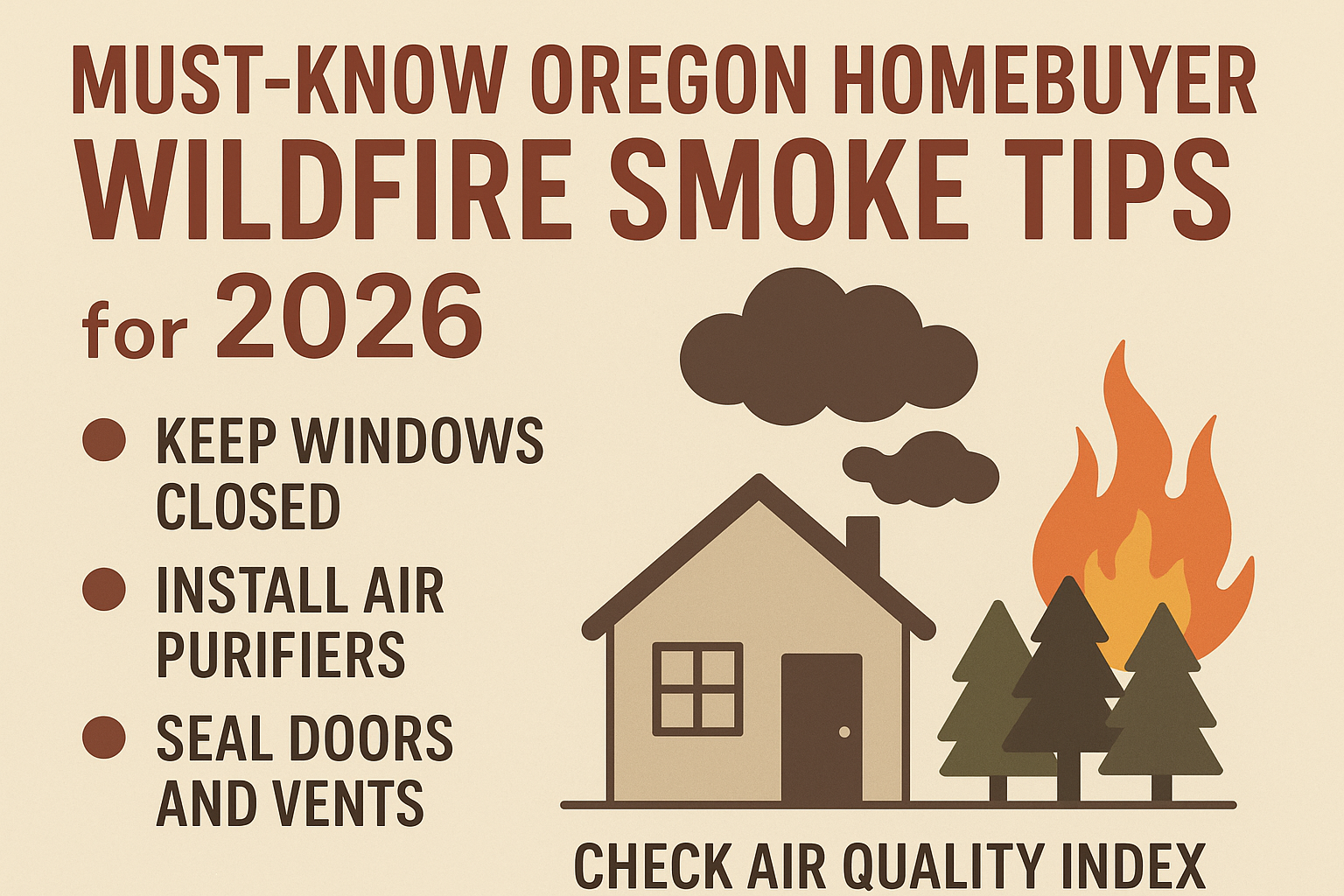
Leaky doors and windows are two of the most common ways wildfire smoke sneaks inside. If you can see even a sliver of daylight around a doorframe, you’ll likely have a path for unwanted air.
To address this, you’ll want to:
- Apply weatherstripping around windows to reduce gaps along the edges.
- Install door sweeps at the base of exterior doors to limit drafts.
- Inspect vent covers to ensure they fit snugly and repair any noticeable damage.
- Caulk cracks in the exterior siding or foundation that might let air seep through.
When done properly, these small job site fixes help keep smoke where it belongs: outside. You’ll also notice an immediate benefit on chilly days, since a well-sealed home stays more comfortable and energy-efficient in every season.
Upgrade filtration systems
Air filters play a big role in maintaining safe indoor quality. If you rely on a standard HVAC system, check the filter’s efficiency rating, often referred to by a MERV (Minimum Efficiency Reporting Value). Higher MERV ratings capture more and smaller particles.
You might look into investing in a MERV 13 or better filter for your central heating and cooling system. These filters can help trap the fine particulates from wildfire smoke better than a generic filter. If you don’t have a central system, portable air purifiers with HEPA filters are another good solution. For a single-story home, you may only need one or two strategically placed purifiers. In multi-level homes, aim to have one purifier per floor or in the rooms you use most.
Choosing the right purifier
• Size your portable purifier for the room where you’ll place it.
• Look for models with a true HEPA filter, rather than a “HEPA-type” filter.
• Consider additional features, such as activated carbon, to reduce odors.
Be sure to replace filters regularly, following your HVAC or purifier manufacturer’s recommendations. Delaying filter changes often defeats the purpose of your filtration system, since clogged filters compromise airflow and trap less smoke.
Adopt smart ventilation
When outside air is heavy with smoke, opening windows and doors might do more harm than good. However, your home still needs proper airflow to reduce odors, moisture buildup, and indoor pollutants. Designing a controlled ventilation strategy helps you balance fresh air needs against wildfire intrusion.
Natural ventilation works best when smoke levels are low. On days when the air quality index (AQI) spikes, limit how much outside air you let in. In many Oregon neighborhoods, you’ll see air quality forecasts similar to a weather report, so tune in each morning. When smoke conditions improve, open your windows for a short period to cycle out stale indoor air. Be strategic about timing too. Early morning or late evening might be best for a quick refresh if smoke levels subside temporarily.
Future-proof with climate awareness
Wildfires are increasingly unpredictable, and 2026 projections indicate a continued trend toward hotter summers. As a homebuyer in Oregon, staying informed can guide you in making long-term improvements that protect both comfort and property value.
Rather than viewing wildfire mitigation as a one-time fix, approach it as an evolving strategy. Seasonal changes may require updating your approach. Maybe you’ll need more robust sealing if a window loses its tight seal over time, or perhaps a newer HVAC system would offer better filtration settings. Keeping pace with climate patterns can help you spot new vulnerabilities early.
Final tips for peace of mind
Taking the time to bolster your indoor air quality does more than protect you from wildfire smoke. It also helps reduce allergens and perfects your home’s overall comfort. As you settle into your new place, try these last few suggestions to maintain a healthy indoor space:
Keep an eye on indoor humidity. Overly humid spaces can develop mold, so balance moisture levels, especially if you’re less likely to open windows during wildfire season.
Regularly check your home’s exterior sealants. Weather and temperature swings can warp materials, creating new gaps that let smoke inside.
Consider a whole-house ventilation system. Systems designed with heat recovery or energy recovery can improve air exchange efficiency without letting all your climate-controlled air escape.
Review local guidelines and fire maps each year. Being aware of high-risk areas helps you plan for adjustments and upgrades.
Even if you can’t predict every twist in Oregon’s wildfire seasons, you can control your home environment. You’ll gain peace of mind knowing you’re ready for whatever the next smoky summer brings.
With these Oregon homebuyer wildfire smoke tips, you can transform your new home into a place of refuge and calm. A few simple upgrades in filtration, sealing, and ventilation are all it takes to stay safe, breath easy, and truly enjoy the magic of Oregon living in 2026.