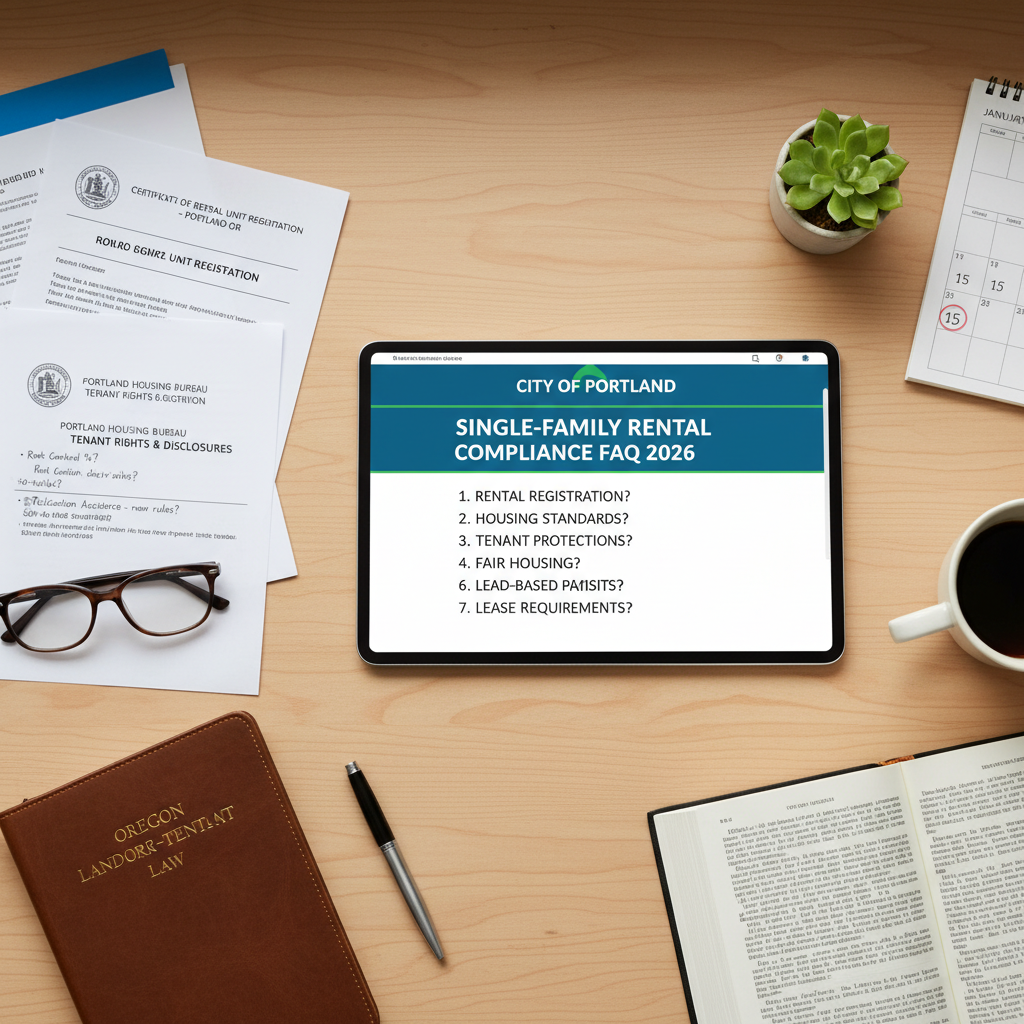
As a single-family rental landlord in Portland, you have a packed schedule of compliance tasks to tackle at the start of 2026. From sending out time-sensitive notices to attending mandated trainings, there’s a lot to keep track of. This single-family rental compliance faq portland 2026 guide walks you through the key dates, forms, inspections, and contacts you need for a smooth first quarter.
By staying on top of Portland’s seasonal requirements, you can keep tenants satisfied, avoid costly penalties, and protect your investment. Read on for a clear breakdown of what to submit, when to do it, and how to meet every Q1 deadline.
Important notice deadlines
Portland landlords must provide specific notices throughout the year, and Q1 2026 is no exception. The city enforces these requirements to maintain transparency with tenants and encourage fair practices.
-
Rent increase notice
If you anticipate raising rent between January and March 2026, you’ll need to send a written notice. Familiarize yourself with Portland’s minimum notice period. Typically, the city mandates at least 90 days’ notice for a rent increase, though you should confirm whether new local or state laws impact this timeframe for single-family rentals. -
End of tenancy notice
Landlords planning not to renew a lease or shift to a month-to-month agreement must notify tenants in advance. The required lead time can vary based on how long the tenant has lived in the unit. If your tenant has resided in the home for more than a year, a 60-day notice is often standard. Keep an eye on local ordinance adjustments in 2026, as these can shorten or lengthen the notice period. -
Utility billing updates
If you pass on utility costs to your tenant, you may need to provide an updated breakdown of estimated charges. These notices help your tenant plan for monthly expenses and protect you in case of disputes.
Required forms and documents
Beyond notices, you’ll likely use several official forms to maintain compliance in Q1 2026. Some forms may be new or updated to reflect recent regulatory changes. Check Portland’s housing bureau website or your local housing authority for the latest versions.
Rental agreement addendums
Portland has introduced addendums in past years to safeguard tenants, outlining policies like relocation assistance or limitations on security deposit collection. Review your current lease package to ensure it incorporates any necessary addendums relevant in 2026. This helps prevent misunderstandings and legal disputes.
Carbon monoxide and smoke alarm disclosure
If your rental property has fuel-burning appliances or an attached garage, Oregon law requires you to maintain functional carbon monoxide alarms. Make sure to complete or update any disclosure forms indicating the presence and proper upkeep of these safety devices. Similarly, smoke alarms must meet local fire code specifications. Retain a signed copy of the alarm disclosure for your records.
Lead-based paint disclosure
Properties built before 1978 can contain lead-based paint, so federal regulations require a lead disclosure form. If your single-family rental falls under this criteria, give prospective tenants an Environmental Protection Agency pamphlet on lead hazards, along with the completed disclosure form.
Inspection timelines
Inspections keep properties safe and habitable. Portland landlords have several inspection dates to account for in Q1 2026. Make sure to schedule them in advance to avoid last-minute scrambling and potential fines.
-
Annual unit inspection
Local ordinance may require landlords to conduct an annual inspection to check on basic habitability standards. If your annual inspection aligns with Q1, send tenants advance notice of entry (typically 24-48 hours) listing the date, approximate time, and reason. -
Maintenance-specific checks
If you own older properties or have had repeated maintenance concerns, certain systems like plumbing, electrical, and HVAC might warrant extra attention at the start of the year. This can also be a cost-effective approach, since early intervention helps you avoid bigger expenses in the future. -
City-mandated inspections
Some single-family rentals are subject to city-mandated inspections depending on their location or age. If your unit falls under this category, pay close attention to city communications that specify the inspection date. Failing to accommodate inspectors or comply with follow-up requests can result in citations.
Pro tip: Keep a thorough folder (digital or physical) for each property where you store completed inspection reports, pictures, receipts for repairs, and any relevant forms. This level of organization helps you quickly respond if the city requests additional information.
Training obligations
Whether you’re an experienced landlord or just starting out, Portland strongly encourages property owners to attend formal training sessions. While some sessions are optional, others may be required as part of compliance.
Local landlord training
Portland often hosts landlord training classes in Q1 to cover updates on local legislation, notice requirements, and tenant protection strategies. If attendance is mandatory or recommended, it’s wise to mark those event dates early. You’ll pick up best practices for handling security deposits, responding to tenant requests, and staying within fair housing guidelines.
Fair housing workshops
Fair housing laws protect tenants from discrimination based on race, color, religion, national origin, sex, disability, and familial status. In some counties, additional protected classes may apply. Periodically, the city or state schedules fair housing workshops. If you see one scheduled for Q1 2026, consider attending to brush up on applicable rules.
Online refresher courses
If your in-person schedule is full, you might find accredited online modules that satisfy certain city or state training requirements. Check the official Portland housing bureau website or landlord associations for recognized programs, costs, and deadlines.
Common questions about Q1 2026 compliance
Even experienced property owners can wonder if they’ve overlooked details. Below are a few quick answers to typical landlord FAQs:
- When should I start preparing my Q1 notices?
It’s best to prepare notices in late December 2025 so they are ready to send by early January if needed. - Do my tenant’s rights change if I switch to month-to-month?
Generally, the same tenant protections and notice requirements apply, though you should double-check local laws to ensure no new provisions took effect in 2026. - Can I combine notice topics under one document?
Although combining notices might seem convenient, Portland usually prefers separate forms. This avoids confusion and meets requirements for content, language, and timeline. - What if my property fails an inspection?
You’ll typically receive a correction notice detailing the issues. Address them within the specified window, and schedule a follow-up inspection to confirm compliance.
Key takeaways
You can reduce stress and maintain a good relationship with your tenants by staying organized and informed during Q1 2026. Focus on these main points:
- Set reminders for time-sensitive notices such as rent increases and end-of-tenancy notifications.
- Keep your lease documents and addendums up to date with Portland’s latest requirements.
- Schedule inspections well in advance, and maintain thorough records of all property evaluations.
- Attend or complete any mandated trainings to show you meet the city’s landlord education expectations.
- Don’t hesitate to confirm local regulations through official government channels, especially if you have a unique rental situation.
By following these guidelines, you can navigate the single-family rental compliance faq portland 2026 landscape more confidently. Each quarter brings new challenges, but with solid preparation, you’ll be ready for whatever surprises the new year might bring. Good luck with your Q1 rental operations and remember to keep the lines of communication open. Your tenants and your business both benefit when everyone stays informed and aligned on local regulations.