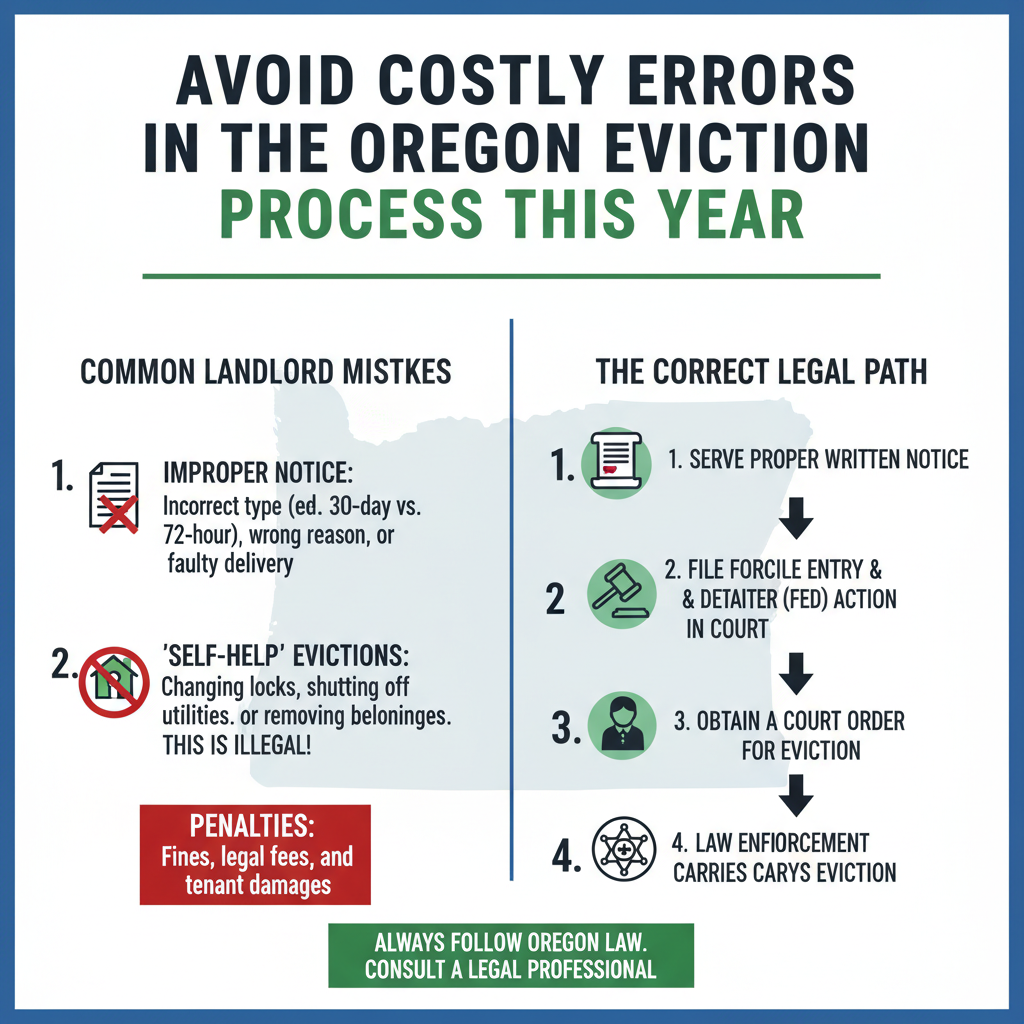
Your landlord-tenant relationship in Oregon can feel complicated if you are unsure where to start with the eviction process. Yet a clear roadmap can put you in control and help you avoid unnecessary setbacks. Below is a friendly, step-by-step guide to the Oregon eviction process in 2026, from the initial notices you give (or receive) to final move-out procedures. Understanding each phase reduces confusion, cuts down on mistakes, and saves you time and stress.
Understand the eviction basics
The Oregon eviction process typically begins with a grounds for eviction, which can include nonpayment of rent or violating lease terms. If you are a landlord, you must provide the right notice and follow the required waiting periods before filing anything in court. If you are a tenant, you need to respond promptly to any notice you receive so you do not miss deadlines or risk default judgments.
Eviction is a serious legal matter that removes a tenant from the property, so Oregon law outlines specific steps. Whether you want to ensure compliance as a landlord or protect your rights as a tenant, you will need to know how the process flows from start to finish.
Know your 2026 notice options
If you are initiating an eviction, your first step is to serve the correct notice. If you are on the receiving end, you need to confirm whether that notice is valid. In 2026, Oregon law continues to recognize several types of notices. The most common include:
- Nonpayment of rent notice: Often a 72-hour or 144-hour notice, depending on your lease and how late the rent is. Landlords must spell out the exact rent owed and give tenants a clear timeframe to pay or vacate.
- No-cause notice: Typically used for month-to-month tenancies that are under a year in duration. If the tenancy is longer than a year, different rules may apply.
- For-cause notice: Issued when a tenant violates specific lease conditions, such as damaging the property or repeatedly creating a disturbance. Landlords must outline the breach and often provide a chance to correct it.
Read any notice in detail. Pay attention to exact dates, the amount owed (if applicable), and the remedy period. If you are uncertain about the notice’s legality, promptly seek clarification from reliable legal resources or local housing authorities.
File the legal documents properly
Should the tenant fail to address issues by the notice deadline, the landlord can file an eviction lawsuit with the court. It is essential for the landlord to follow proper documentation rules. Filing too early or using the wrong forms can cause the court to dismiss your case.
Court filing involves providing:
• A copy of the eviction notice.
• The summons and complaint forms.
• Payment of the required filing fees.
After filing, the landlord must serve the tenant with the complaint and summons. You can do this in person or through an alternative method that meets Oregon’s service requirements. If you are the tenant, keep in mind you have a limited number of days to file a response (usually referred to as an “answer”).
Prepare for the first appearance
Shortly after the complaint is filed, Oregon law typically requires the parties to attend a first appearance or mediation session. This might be your opportunity to resolve the dispute outside the courtroom. Many courts encourage mediation, where you and the other party can come to a compliance agreement or repayment plan.
If mediation fails or is not offered, you will head to a formal hearing. As a landlord, bring evidence such as lease documents, rent records, and any proof of rule violations. As a tenant, organize your defense, including evidence of rent receipts or proof you have corrected any cited issue.
Attend the court hearing
The eviction hearing decides whether the landlord has the legal right to repossess the property. Even though many evictions revolve around rent issues, you can present a range of defenses or counterclaims. For instance, you might claim that you withheld rent for legitimately needed repairs, or that the notice you received was faulty.
Following the hearing, the judge will typically issue a ruling. If the landlord wins, the court issues a judgment of possession, which allows for the finalizing of the eviction. If you are a tenant and you lose, you may have a small window to appeal or move out by a stipulated deadline. Not moving out on time can lead to additional legal consequences, including forcible removal.
Respect the move-out timeline
Once a landlord receives a favorable judgment, the next step involves the court issuing a writ of execution. This is the legal document that authorizes the sheriff to remove the tenant if they do not move out voluntarily. The move-out date can vary, but it usually follows a rigid schedule to allow tenants enough time to relocate.
For tenants, planning ahead—such as booking a moving truck or securing new housing—can ease the stress of a forced move. You might also negotiate a move-out date even after the judgment, provided both sides are willing to cooperate. If you need more time, communication is key, but keep in mind the landlord is not obligated to grant extensions beyond what the court provides.
Refer to an eviction timeline table
The exact timeframe for each stage can differ based on your local court’s rules and the specific notice used. This table gives you a rough breakdown of how the 2026 Oregon eviction process might look:
| Stage | Estimated Duration | Key Points |
|---|---|---|
| Serve eviction notice | 72 hours to 30 days, depending on type | Tenant has time to fix breach or move out. |
| File complaint in court | Immediately after notice expires | Must include notice, complaint, and summons. |
| Respond to complaint | Usually 7 days from service | Tenant files “answer” or may lose by default. |
| First appearance or mediation | Typically 1–2 weeks after filing | Chance to settle or proceed to hearing. |
| Court hearing | 1–2 weeks after first appearance | Judge decides possession, landlord or tenant. |
| Writ of execution | Immediately upon judgment | Authorizes sheriff to enforce eviction. |
| Final move-out | 4–7 days after writ is posted | Tenant must leave or face forcible removal. |
Use this timeline only as a reference, because dates can shift based on local congestion, holidays, or unique circumstances in your case.
Avoid common pitfalls
Oregon eviction law is precise. Minor missteps can cause long delays or even a dismissal. Below are a few common avoidance tips:
• Not delivering the notice properly: Each notice type has its own method for valid service. Failing to serve correctly can reset your timeline.
• Missing deadlines: Late responses, whether by the landlord or the tenant, can lead to default judgments or delayed action, both of which cost money.
• Ignoring mediation: Evictions can tie up your schedule and finances. Mediation is often faster, and an agreement reached there can be more flexible for both sides.
• Overstepping tenant rights: A landlord who attempts a “self-help” eviction—changing locks or shutting off utilities—is at risk of legal penalties.
• Forgetting documentation: A clear paper trail—receipts, letters, photos, or emails—can make or break your argument in court.
Final reminders for tenants and landlords
Whether you are initiating or contesting an eviction, staying informed is your best line of defense. If you are a landlord, double-check updated forms, filing fees, and whether any pandemic-related rules or local ordinances still apply in 2026. If you are a tenant, respond to notices promptly, gather evidence about your living situation, and ask for help if you cannot resolve the issues yourself.
When in doubt, contact your local housing authority or seek legal advice from reliable resources. Taking the time to do it right helps you avoid costly errors, keep stress levels down, and maintain a healthier landlord-tenant relationship. It all starts with knowing your timeline, following the court’s rules, and directly addressing any problems before they escalate.
Plan each eviction step carefully, and you will have far fewer headaches along the way. If you stay organized, stick to deadlines, and communicate openly, the Oregon eviction process in 2026 can be managed without unexpected complications.