Whether you’re planning a basement remodel, adding a second story, or simply reshuffling your living space, understanding how to read FEMA flood maps is crucial. These maps reveal where flooding is most likely to occur, helping you make strategic decisions that could save you both money and stress in the future. The Portland metro area has several neighborhoods prone to high groundwater and seasonal flooding, so it’s worth taking a closer look at these resources before starting any home renovation project.
Know why FEMA flood maps matter
FEMA flood maps classify areas based on estimated flood risks, and that classification impacts everything from home insurance premiums to permit requirements for new construction. If your property falls within a high-risk flood zone, you could be required to carry additional insurance or follow special building codes. Even if you’re outside a designated flood zone, it’s still a good practice to learn the layout of local waterways, as floods can sometimes stray beyond mapped boundaries.
These maps aren’t just about worrying that your basement might get damp. They offer a window into how your home might stand up to extreme weather events in the years ahead. They can point you toward strategic upgrades, such as elevating electrical systems or installing improved drainage solutions, so you’re better prepared for potential floods.
Review your FEMA flood zone
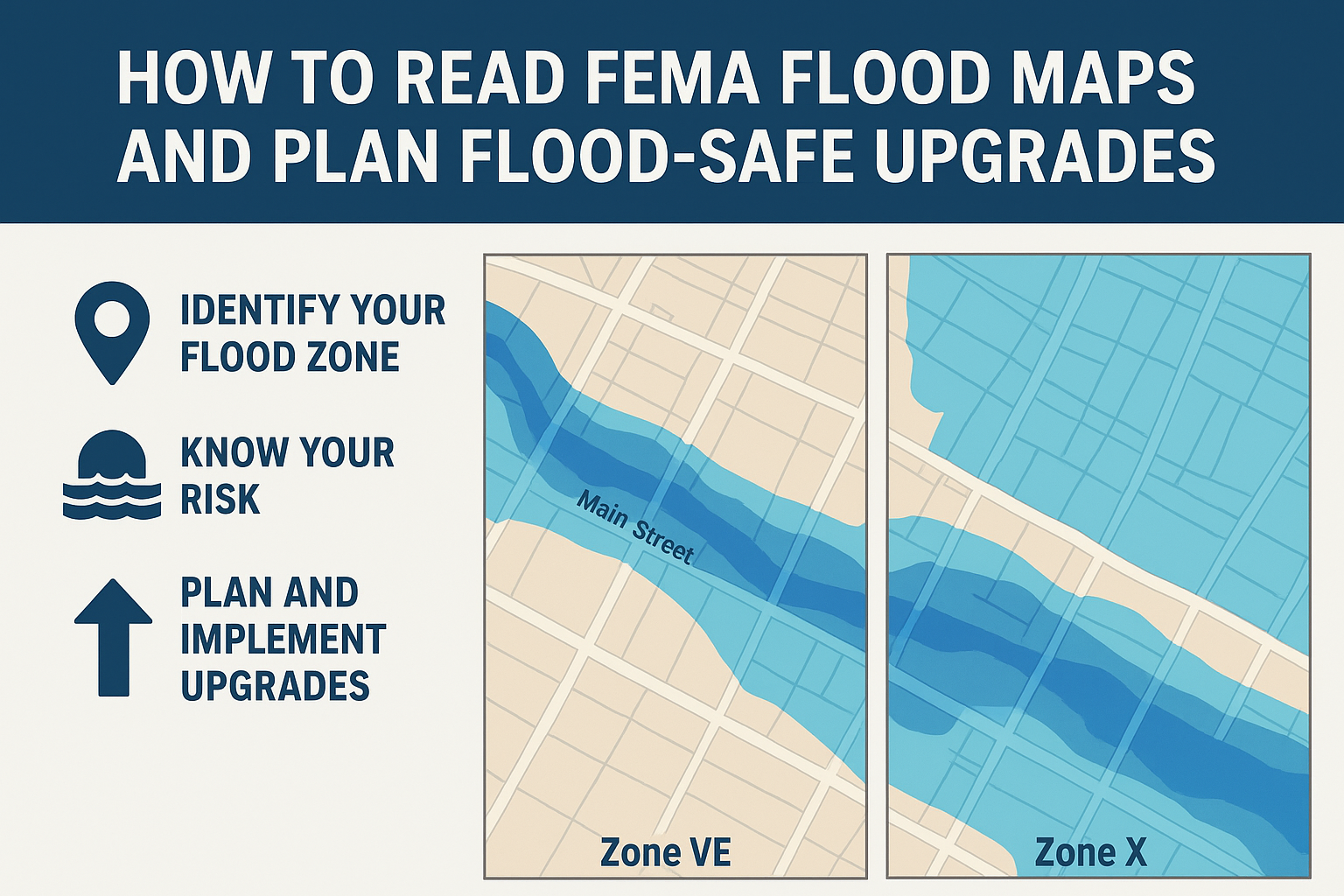
Your first step is to verify which flood zone your property occupies. Flood zone labels, such as Zone A or Zone AE, indicate thickness, depth, or frequency of flooding. You’ll also spot moderate-risk zones labeled as Zone X or Zone B. While these are considered lower risk, you may still experience unforeseen flooding if conditions change rapidly.
Don’t panic if you discover you’re perched in a higher-risk area. Plenty of homeowners live in these zones without incident, especially if they take smart precautions. The point is to catch these details early so you know what to expect before committing your time, budget, and sweat equity to a renovation project.
Navigate the online FEMA tools
FEMA’s website offers a searchable map service called the Flood Map Service Center (MSC). By simply typing in your address, you can see flood boundaries, major waterways, and more. If your property is near a zone boundary, zoom in further to get an accurate reading of your street and parcel lines.
Below are a few helpful tips for a smoother experience on the MSC site:
- Double-check your address. Flood maps can be very granular, so you want the most precise search possible.
- Explore overlay options. Certain map layers show depth and elevation data that clarify how flooding might affect different parts of your yard.
- Use the print function. It’s easier to reference a PDF map when discussing potential renovations with contractors or city officials.
- Bookmark your location. Flood maps are updated periodically, so it helps to revisit the site from time to time and see if anything has changed.
Once you’ve got your map in hand, check where the floodplain boundaries cut across your property, and pay close attention to any crucial base flood elevation figures. This number indicates how high water is expected to rise during a major flood event.
Plan renovations with flood risk in mind
After pinpointing your zone, the next step is to envision any new additions or changes to your home with the flood risk front and center. For example, you might decide to place critical appliances like water heaters or HVAC units on higher floors or elevated platforms. Sealing your foundation walls or adding a sump pump can also help mitigate water seepage.
If you’re working with a professional contractor, mention your flood zone status. Not all contractors are equally familiar with FEMA guidelines, so the more information you share, the better prepared they’ll be when designing your renovation plan. Ask about materials that resist mold and rot, such as flood-damage-resistant insulation or moisture-resistant flooring.
Upgrade to protect your property
Strategic upgrades can help you fend off water damage or at least minimize the impact if a flood does occur. Many projects are easier and cheaper to complete during a renovation than waiting until after a flood has caused damage:
- Elevate electrical and plumbing fixtures. Raised outlets and wiring protect your home’s core systems.
- Improve drainage around your foundation. French drains or properly graded landscaping can steer rainfall and floodwaters away from the house.
- Choose flood-friendly materials. Tile or sealed concrete floors can survive minor flooding better than carpet or wood, and dry out more quickly.
- Install check valves in the plumbing. These specialized valves prevent floodwater and sewer backups from coming in through drains.
Consider these modifications even if you’re in a moderate-risk area. Flooding doesn’t always respect a drawn line on a map, and moisture can still creep into spaces during exceptionally wet seasons.
Stay informed and adapt
The best approach to flood safety isn’t set-it-and-forget-it. FEMA periodically updates flood maps based on new data, urban development, and changing weather patterns. If you glance at your map now, don’t assume next year’s storm season will bring the same risk profile. Stay in touch with local agencies like the Portland Bureau of Environmental Services, which monitors flood mitigation efforts and can provide cutting-edge information about storm drains, levees, and infrastructure projects in your neighborhood.
If updated profiles show your zone has changed, you might benefit from an insurance discount or additional building guidelines. Keep receipts and documentation for any flood-proofing improvements you make, as they can reduce insurance costs and even boost your property value.
Conclusion
Getting familiar with how to read FEMA flood maps isn’t just a box to check for compliance—it’s a roadmap for safeguarding your renovations, protecting your investment, and gaining peace of mind. By combining a basic knowledge of flood zones with smart upgrades, you can avoid expensive repairs and maintain a comfortable home in every season. A little legwork now—scanning the digital maps, elevating key systems, shoring up drainage—goes a long way toward making your property more resilient. If you’re starting a renovation project soon in the Portland metro area, take the time to explore your flood zone, talk with your contractor, and fine-tune your plans accordingly. You’ll thank yourself later the next time Mother Nature unleashes a downpour.